A SoHo Summer with The Hasselblad X1D II
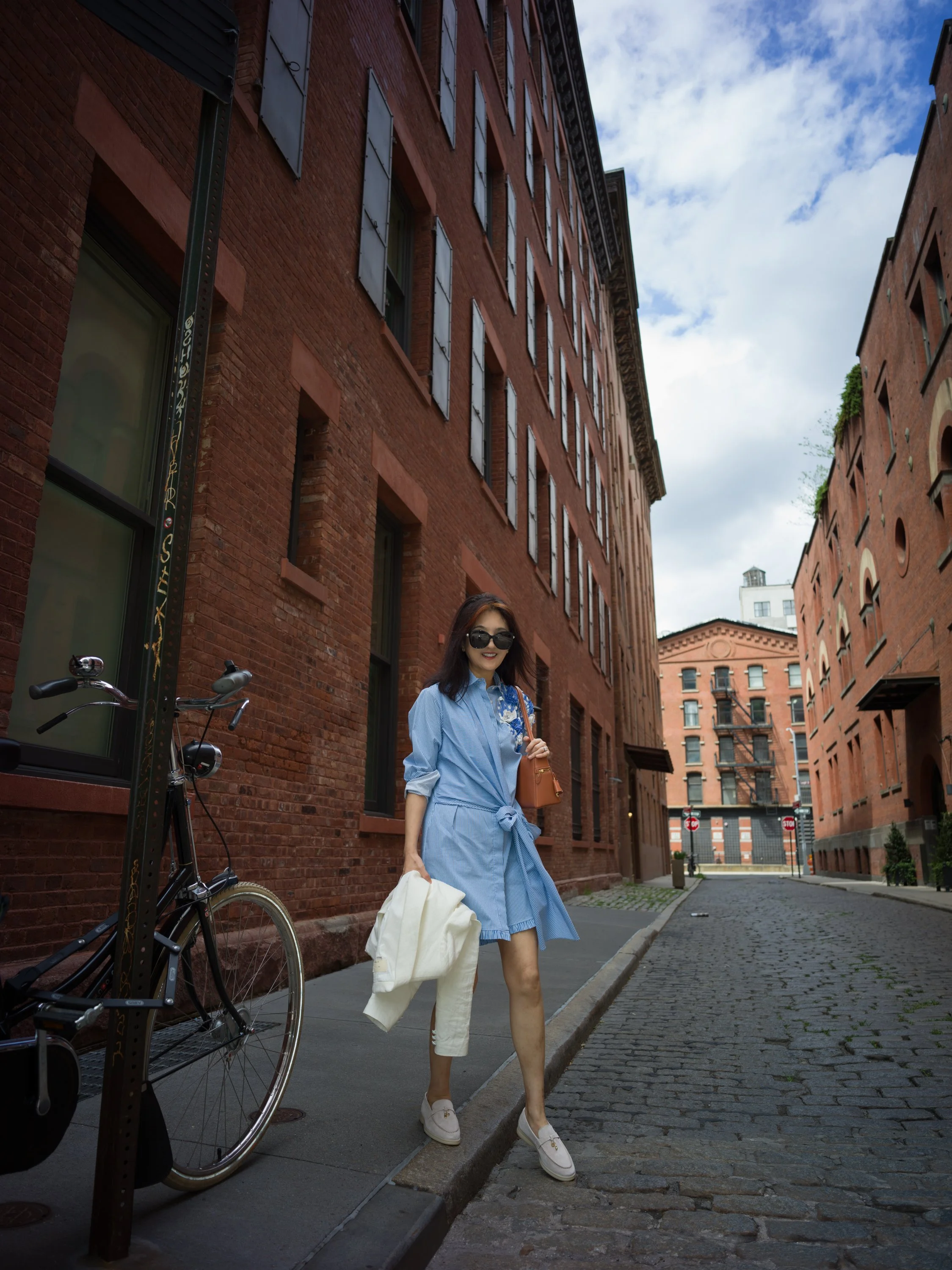
Cobblestones, shutters and a borrowed bicycle. XCD 28P, f/4, 1/250 s, ISO 100.
A weekend to ourselves
Every parent knows the strange quiet of the first weekend the kids are away. Ours came in the middle of July 2025. Our son and daughter were both off at summer camp, the house was suddenly much too tidy, and Jenny and I found ourselves with a Saturday that belonged to nobody but us. So we did what we used to do before there were school runs and science fairs. We headed into the city with no plan beyond lunch, a stroll around SoHo, a little light shopping, and a camera.
It was a grey-white day, the kind of New York summer sky that can't decide whether to burn off or open up. Jenny wore a blue pinstriped shirt dress with embroidered blue-and-white flowers climbing over one shoulder. She carried a cream jacket over her arm that she never once put on, and a cognac bag that turned out to be the warmest color in every frame.
None of these pictures was planned. We walked down cobblestone side streets lined with old warehouses, drifted up past Canal, cut across Hudson Square and ended up among the shop windows of SoHo. The photographs happened the way the day did: in between lunch and shopping, whenever the light or a street corner asked for one.
I brought one camera, one small lens and a flash about the size of a matchbox. The camera was a Hasselblad X1D II 50C, a medium format body first announced in 2019. That makes it ancient by camera-industry standards and practically prehistoric next to the phone in my pocket. I'll explain why I keep reaching for it anyway. First, the phone.
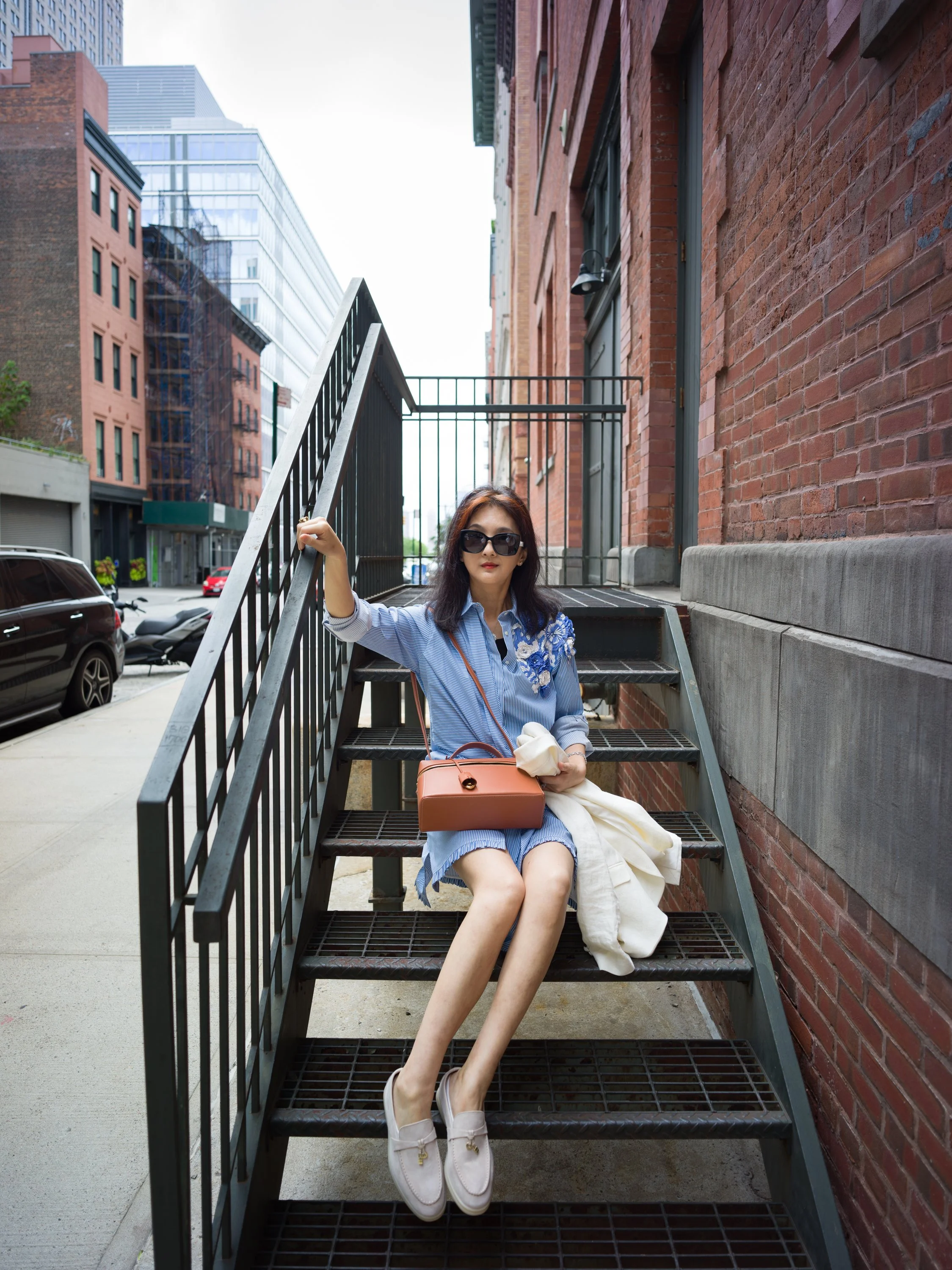
A rest on someone's stoop. XCD 28P, f/4, 1/100 s, ISO 100.
The machines are coming for our pictures (again)
In 2019 the writer behind Street Silhouettes published an essay called The Role of the Photographer in the Future. Apple had just bought a startup that fused multiple frames into one cleaner image, and he predicted that Siri would soon take the perfect picture for us. If that happened, he asked, who would the author be? The machine has no intent, and the person holding the phone only pointed it. His answer was to shoot film, because none of those clever machines would ever load a roll of Ilford.
His nightmare looks gentle now. He worried the phone would take the picture for us. Today we don't even need to be there. I can type "a woman in a blue embroidered shirt dress in a crosswalk under the Holland Tunnel signs, overcast, medium format look" into an image model and get something plausible in seconds. The light will be perfect, the traffic will politely disappear, and nobody will have been honked at.
I spend a good part of my working life around AI, so I'm not here to wave a pitchfork at it. But the 2019 question has only got sharper. If a flawless image can be conjured from a sentence, what is a photograph still for?
Here's where I've landed. A photograph is worth something because somebody was there, and because what happened in front of the lens could have gone differently. Fact is, the frame of Jenny standing under the Holland Tunnel signs exists because the two of us stood in a live intersection for about twenty seconds while the light was red, and I had exactly that long to get it. A model can generate a better-lit version of that scene. It can't generate the twenty seconds, or the gust of wind, or my wife laughing at me for making her stand in traffic. What's left for the photographer is exactly the part that can go wrong.
That's also why the camera I chose is almost comically at odds with where technology is heading.
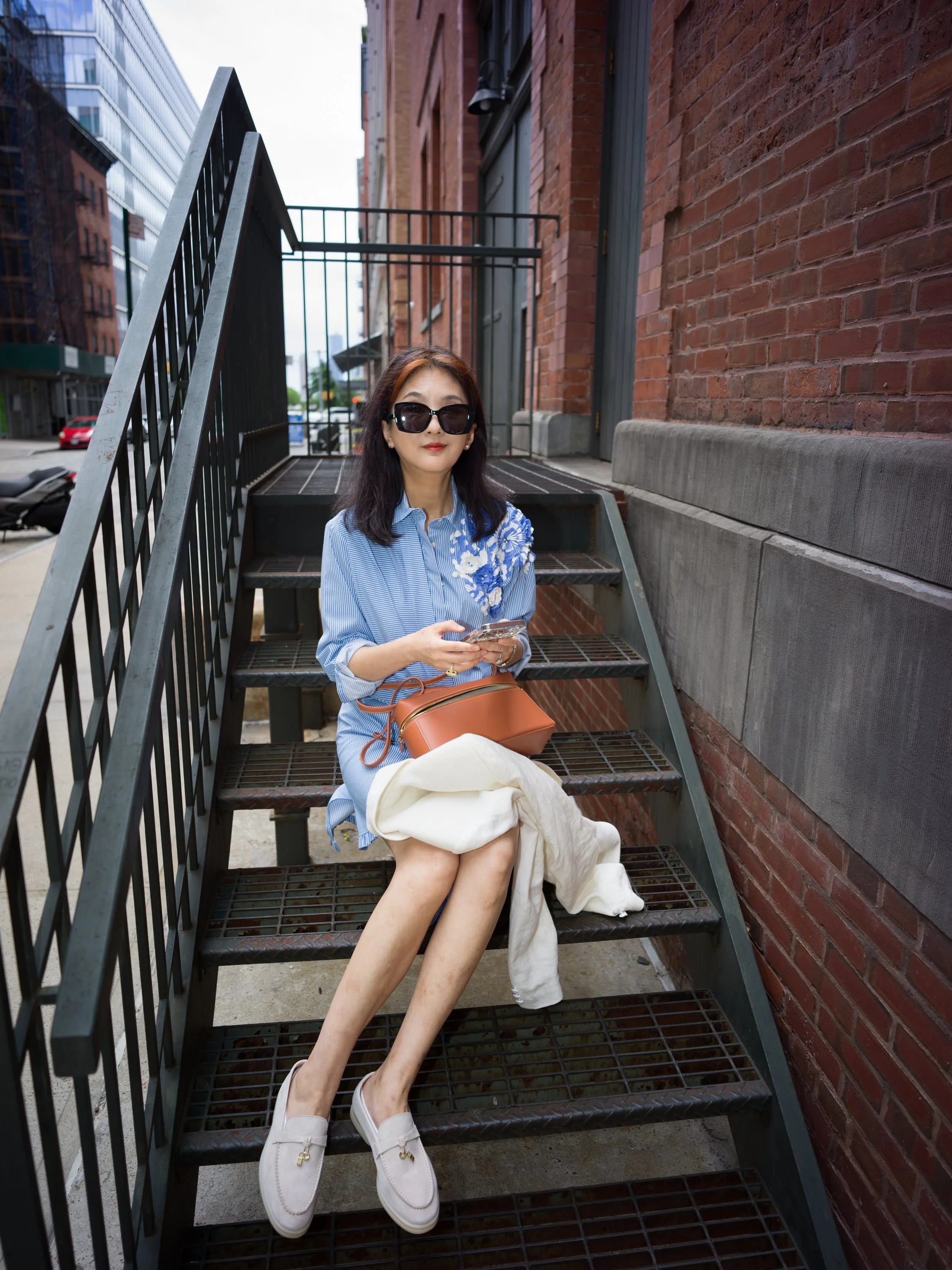
Between frames, the best frames. XCD 28P, f/4, 1/125 s, ISO 100.
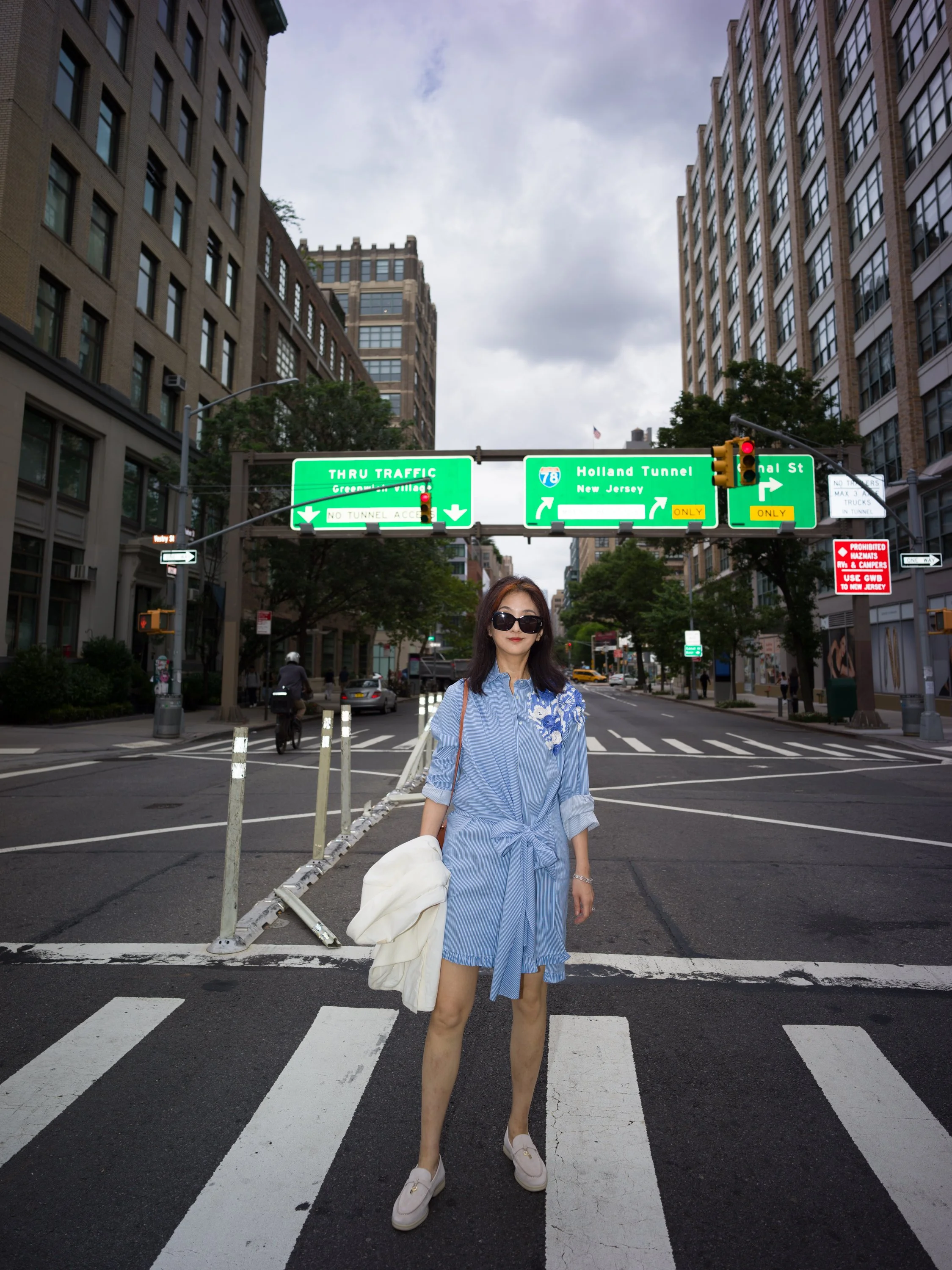
Twenty seconds on a red light. Direct flash from the Godox iT30 Pro darkens the midday sky. XCD 28P, f/4, 1/1250 s, ISO 100.
The Hasselblad X1D II 50C
Design and build
The first X1D arrived in 2016 at $8,995 and was, frankly, a beautiful prototype you were allowed to buy. The X1D II followed in June 2019 at $5,750. It looked almost the same but was a much better camera for a lot less money. Hasselblad has since moved on to the X2D and the X2D II, but the X1D II is still the one I think looks most like a Hasselblad ought to.
It's a slab of machined aluminium, 148 by 97 by 70 millimetres, with an almost bare top plate. There are two command dials, a few buttons and a mode dial that sinks flush into the body when you don't need it. "Handmade in Sweden" is etched into the metal. The grip is deep, and the back is almost all screen. No joystick, no rear dial, no rows of function buttons. It looks like it was designed by people who own very few, very good things. Next to my Leica Q2 Mono it looks like a close relative that went to architecture school.
It feels as expensive as it is. The body weighs 766 grams with battery and card, and just over a kilogram with the 28mm pancake mounted. That's about what a full-frame body with a standard zoom weighs, for a sensor about 1.7 times the area. Nothing flexes, the doors close with a reassuring click, and Hasselblad describes the body as weather and dust sealed. The battery charges over USB-C in the camera, which matters more than it sounds on a long summer walk.
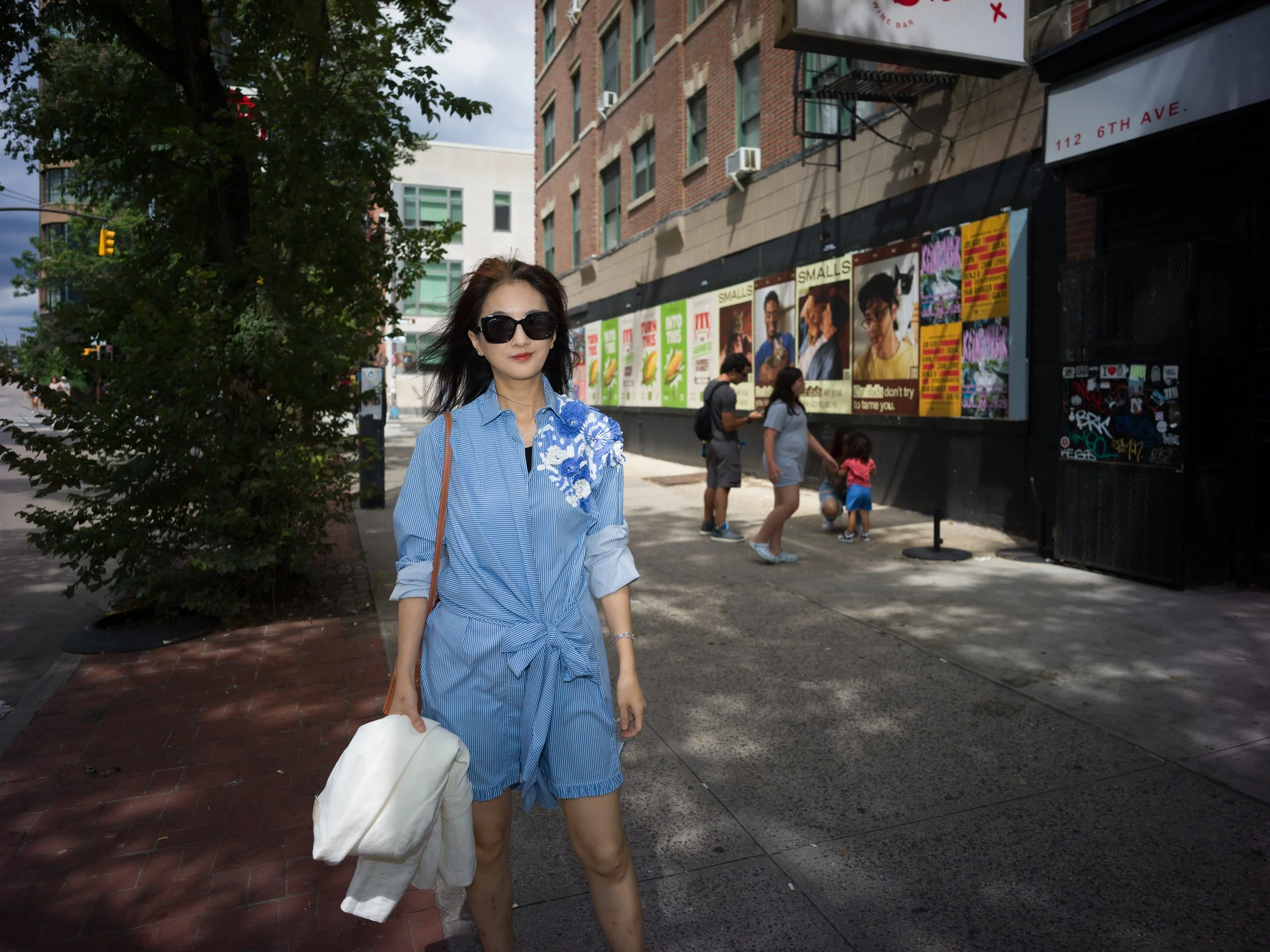
112 Sixth Avenue, and a gust of wind no prompt would think to ask for. XCD 28P, f/4, 1/750 s, ISO 100.
User experience: the honest part
The X1D II is slow, and it would be dishonest to pretend otherwise. It takes several seconds to boot. Autofocus is contrast-detect only, with a single movable point: no face detection, no eye detection, no tracking. On a still subject in good light it's accurate. In poor light it hunts audibly, and there's a noticeable pause between pressing the shutter and the leaf shutter firing. Continuous shooting tops out at 2.7 frames per second. Digital Camera World called the shooting pace "Buddhist-like," which is both a compliment and a warning.
What makes up for it is the interface, still one of the best on any camera. The menu is a single clean page of large icons. The touchscreen behaves like a phone's: you can swipe, pinch to zoom and drag the focus point with a fingertip. The 3.69-million-dot EVF is big and clean. My complaints are that the rear screen struggles in midday sun and doesn't tilt.
A slow camera changes street portraiture. You stop chasing. You place your subject, pre-focus and wait for the street to arrange itself around her: a pedestrian at the right moment, a cab clearing the frame, the wind. It's closer to fishing than hunting, and it suits a day with no agenda. When you're strolling with your wife rather than working a shoot, waiting for the right moment is part of the pleasure.
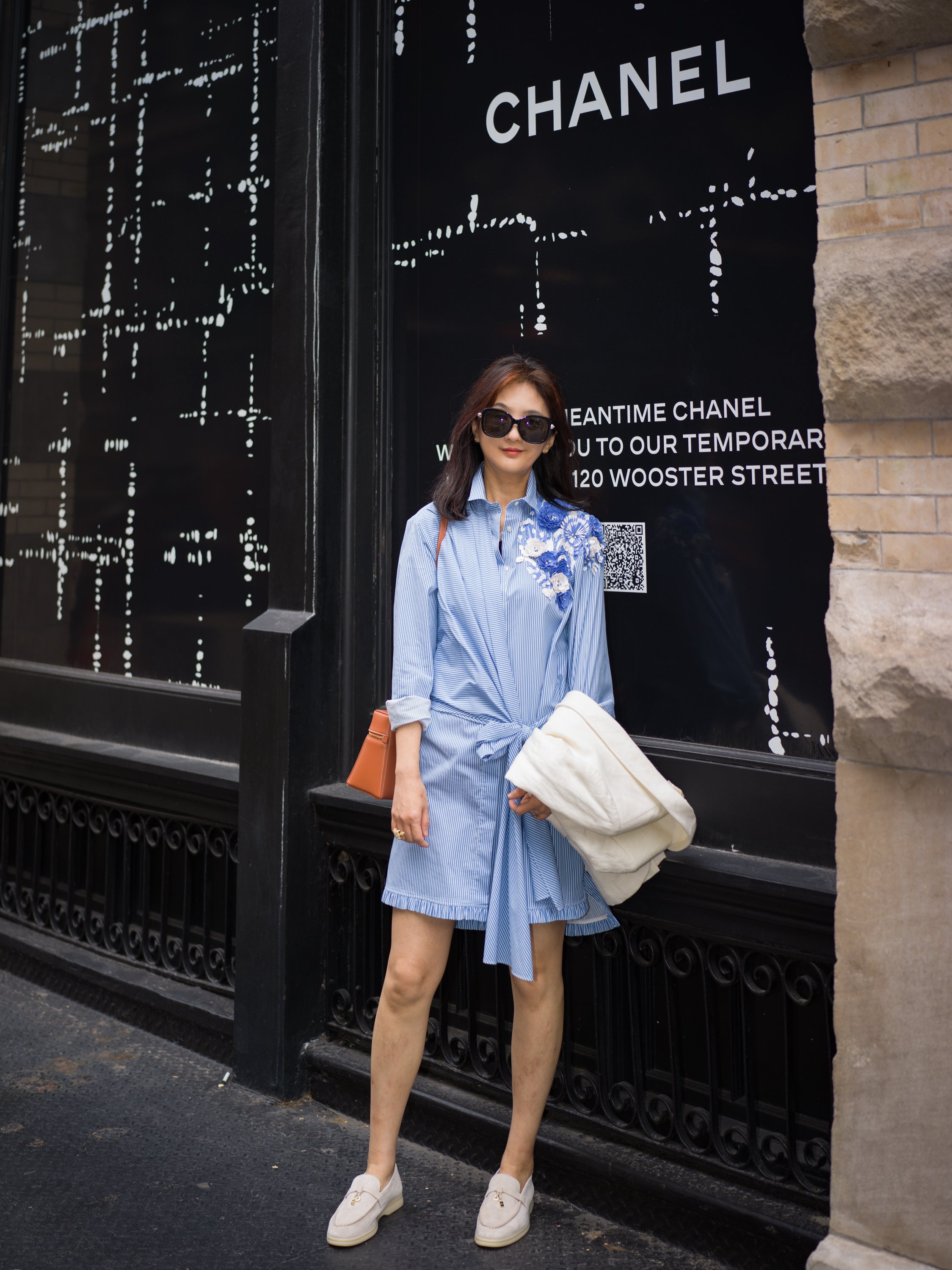
Window shopping in SoHo, where the Chanel window points to its temporary home on Wooster Street. For this stretch I switched to the XCD 55V. XCD 55V, f/2.5, 1/180 s, ISO 100.
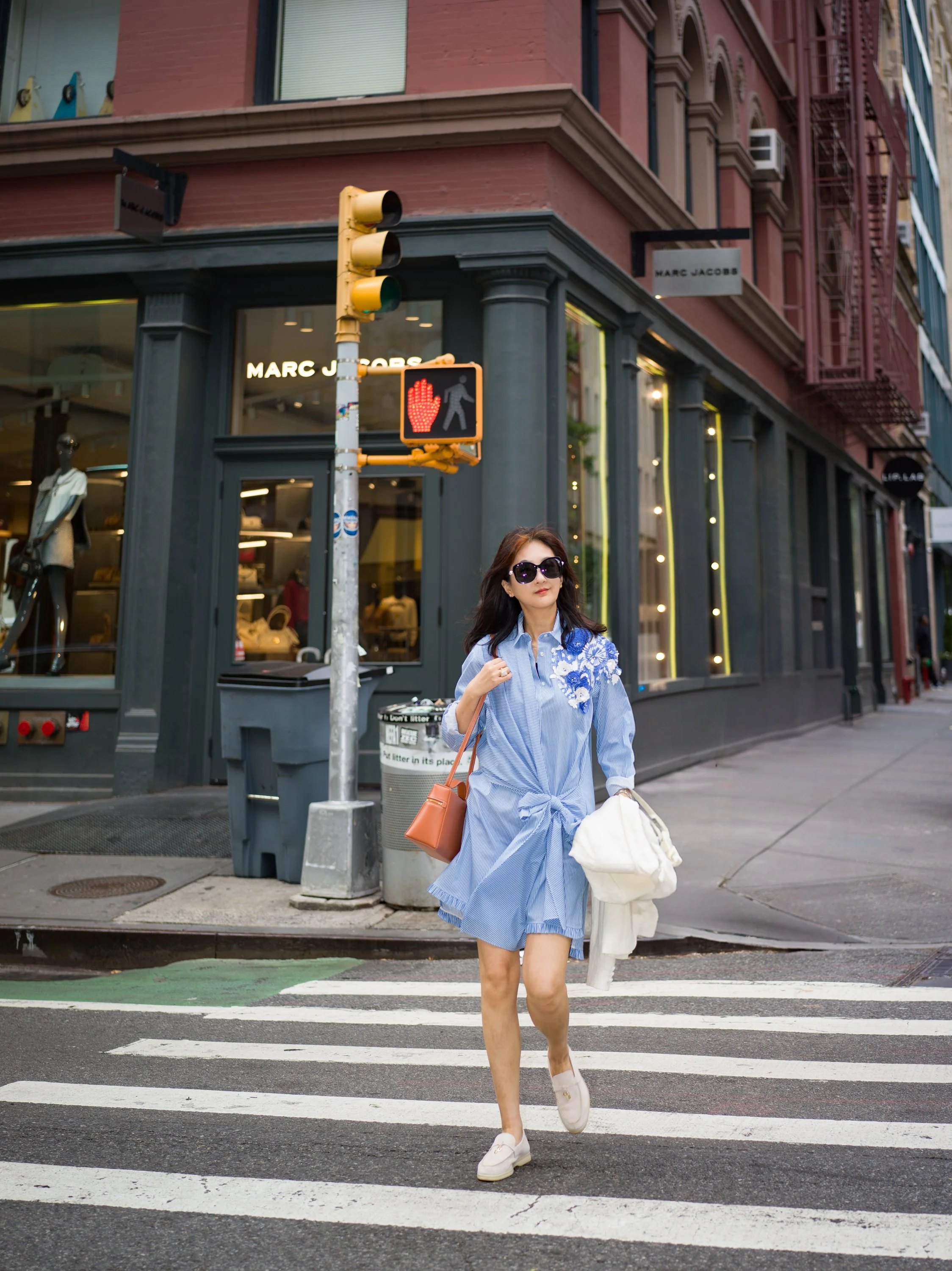
Jaywalking is a New York art form. XCD 55V, f/2.8, 1/200 s, ISO 100.
Image quality
This is why anyone puts up with the rest.
The sensor measures 43.8 by 32.9 millimetres and records 50 megapixels in 16-bit raw files, with up to 14 stops of dynamic range. None of those numbers explains what the files look like. A RedShark reviewer described it best: "a smoothness in the tones and colours that you just don't get with smaller sensors." Transitions are gentle. A cloudy sky falls from white to grey without a hint of banding. Brick has a dozen shades of red in it, not three.
Hasselblad's colour science is very good at the two things that matter most here: skin and blue. Jenny's skin looks like skin, with no orange cast and no plastic smoothing. The blue of that dress, which could easily have turned cyan under flash, stayed the soft shirting blue it was in person. The files needed very little work in Lightroom.
Is 50 megapixels still enough in 2026, with the X2D II offering twice that? For everything I shoot, comfortably. Raw files average around 105 MB, so bring a fast card. This series was shot between ISO 100 and 800, where this sensor sings. A used X1D II now sells for a fraction of its launch price, which makes it one of the more interesting bargains in photography, if you can live with its tempo.
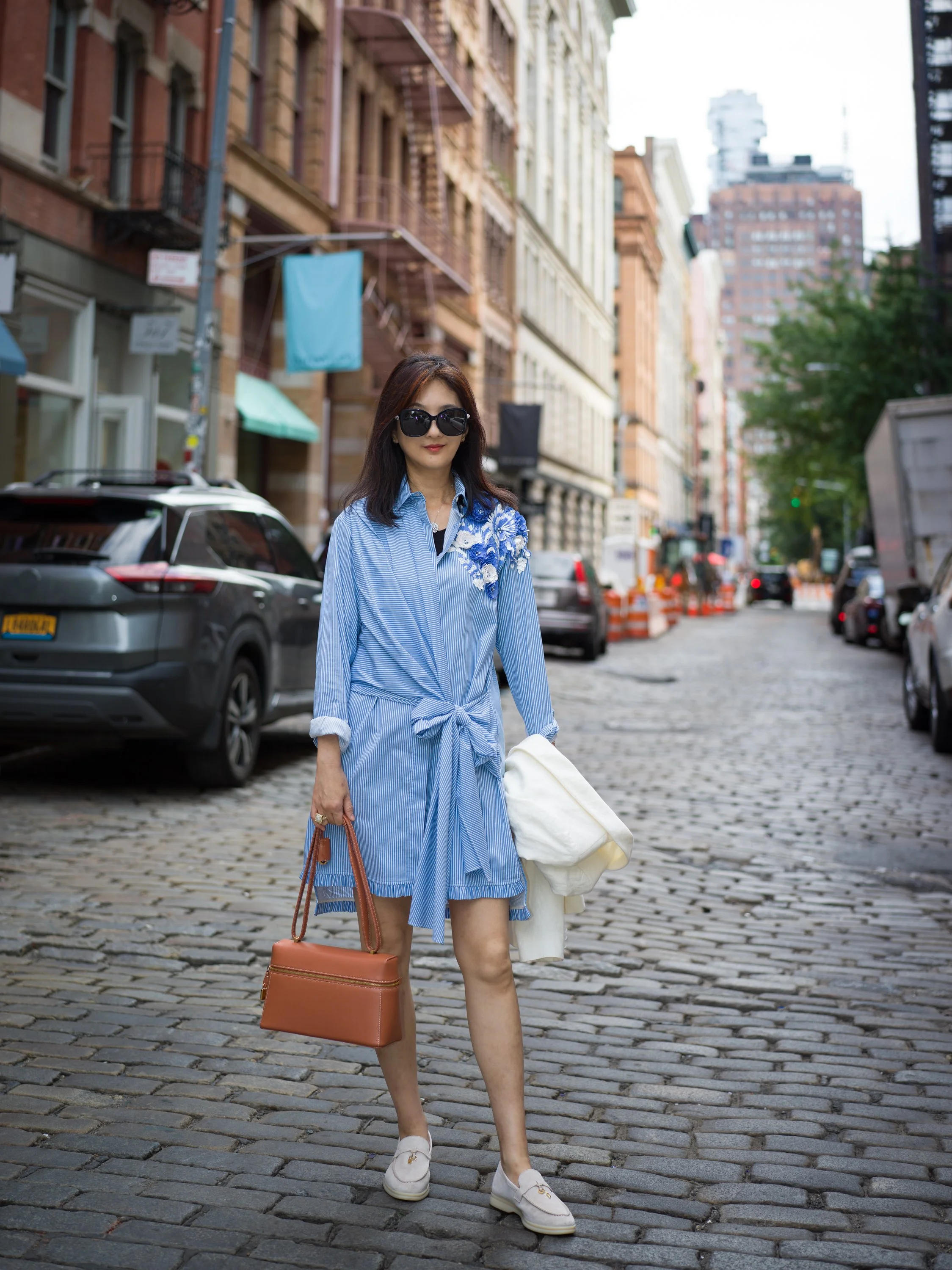
SoHo cobblestones. XCD 55V, f/2.8, 1/200 s, ISO 100.
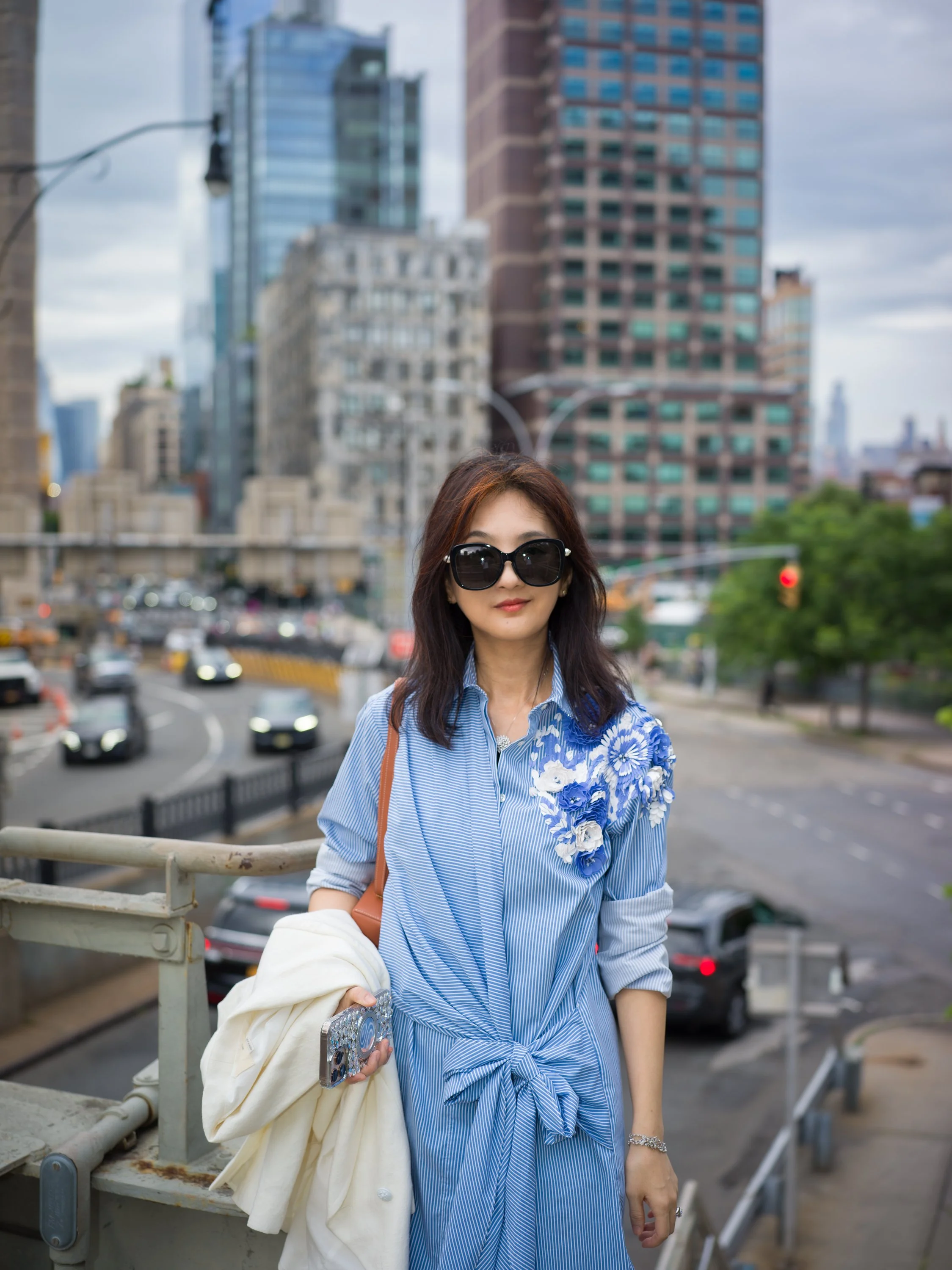
End of the day, above the traffic. XCD 55V, f/3.4, 1/250 s, ISO 100.
The Hasselblad XCD 28P
The lens is what makes this camera work on the street.
Announced in August 2023 at $1,697, the XCD 4/28P is the smallest and lightest lens in the X system. It weighs 245 grams and is 43.5 millimetres long, a flat disc that turns the X1D II into something you can wear on a strap all afternoon. Inside are nine elements in eight groups, including two aspherical elements and one ED element. It focuses down to 22 centimetres with a quick, nearly silent linear motor. As a "P" lens it skips the aperture ring and distance scale. You get a metal barrel and a rubberised focus ring engraved with tiny H's.
On this sensor, 28mm gives roughly the view of a 22mm lens on full frame, wider than the 28mm on my Leica. For environmental portraits that's wonderful: Jenny stands in the middle of the frame with the whole street around her. Look at the Holland Tunnel frame again. Everything that says "New York" is in there. It also demands discipline. Keep your subject away from the edges, hold the camera level, and step closer than feels polite.
f/4 gives depth of field similar to about f/3.2 on full frame, a good middle ground: Jenny separates from the background, and the background still tells you where she is. The lens is sharp from centre to edge. Its roughly 2% barrel distortion and corner vignetting disappear with the Lightroom or Phocus profile.
For four SoHo frames, from the Chanel window to the railing, I swapped to the XCD 55V. It's a roughly 43mm-equivalent f/2.5 lens with a proper manual-focus clutch, and it draws a softer, more classic portrait. Look at the melted towers behind Jenny in that last frame. But the 28P is the lens that lives on the camera.
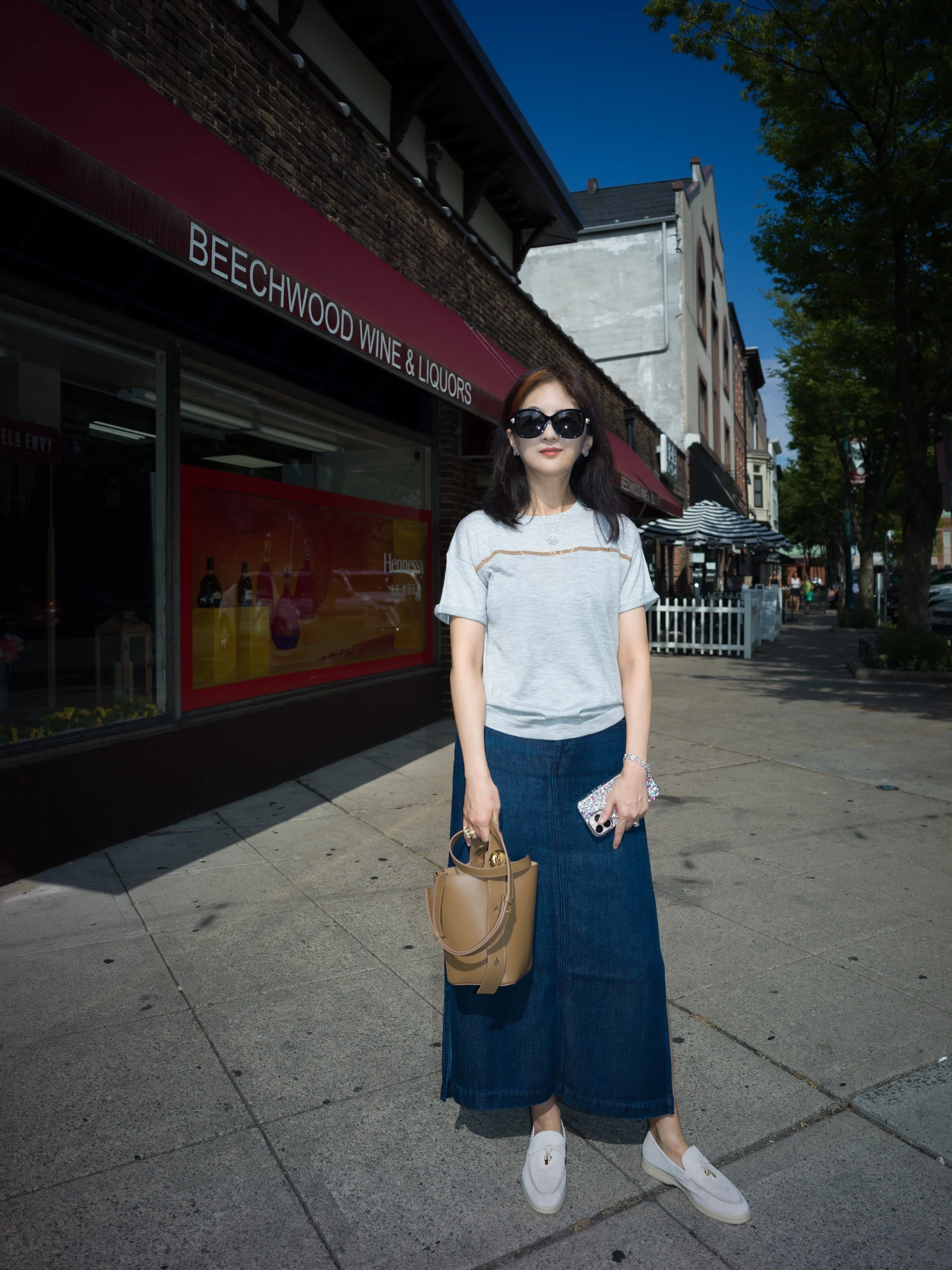
Sunday, closer to home in Summit, New Jersey. The flash lets me take the sky down almost a stop. XCD 28P, f/4, 1/1600 s, ISO 100.
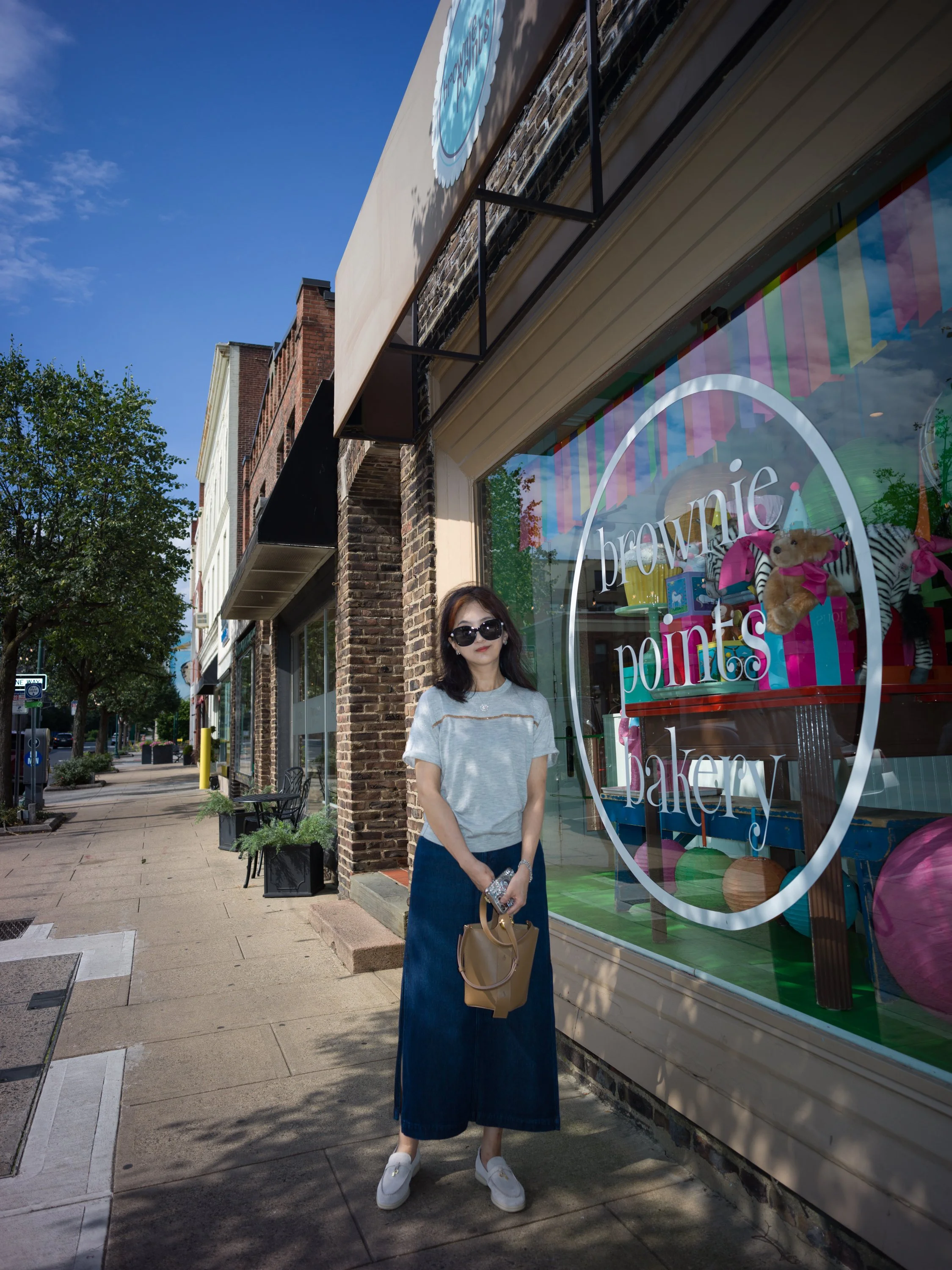
A bakery stop. XCD 28P, f/4, 1/800 s, ISO 100.
The $75 flash on a Hasselblad
Now for my favourite part of the kit, and the reason many of these frames look the way they do.
The Godox iT30 Pro was announced in May 2025 and costs about $75. It weighs 120 grams, small enough to disappear into a pocket. It has a built-in USB-C rechargeable battery good for about 560 full-power flashes, a small colour touchscreen, TTL and manual power down to 1/128, a flip-down diffuser, and Godox's 2.4 GHz wireless system. The trade-offs are what you'd expect from something this small. Power is modest: it's rated at guide number 15, and Digital Camera World measured closer to 11. It can't tilt or swivel, and the battery isn't swappable. Amateur Photographer called it "an easy recommendation to add to your bag." I agree.
There's no Hasselblad version. The X1D II's hot shoe uses the Nikon flash protocol, and Hasselblad's own datasheet lists Nikon Speedlights as compatible, so the Nikon version is the one to buy.
Why bother? Because of the leaf shutter. Most cameras use a focal-plane shutter, two curtains crossing the sensor. Above about 1/250 of a second they form a moving slit, and flash lights only part of the frame unless you use high-speed sync, which costs a couple of stops of power a tiny flash doesn't have. Every XCD lens has a leaf shutter built in instead, a ring of blades that exposes the whole frame at once. So flash syncs at every shutter speed, up to the X1D II's mechanical maximum of 1/2000.
In practice, at ISO 100 and f/4, full sun calls for about 1/1600 (Sunny 16, moved four stops). With a focal-plane camera and flash I'd be stuck at 1/250 with a blown-out sky. With the leaf shutter I can set 1/1600, underexpose the ambient light a little and let the Godox light Jenny. The sky deepens to the saturated blue above the Beechwood awning, the street drops back, and Jenny steps forward in a clean pop of direct flash.
There are two catches, both physics. At guide number 11 and f/4, full power reaches only about 2.7 metres, but the 28mm makes me stand that close anyway. And a full-power burst lasts about a thousandth of a second, longer than a 1/1600 exposure, so the shutter can clip it. Half power often costs less light than you'd expect.
The same trick works underground. In the West 4th Street station, a touch of flash at ISO 800 gave Jenny clean light against the green-grey gloom of the turnstiles, rather than the fish-tank colour the fluorescent tubes would have given her.
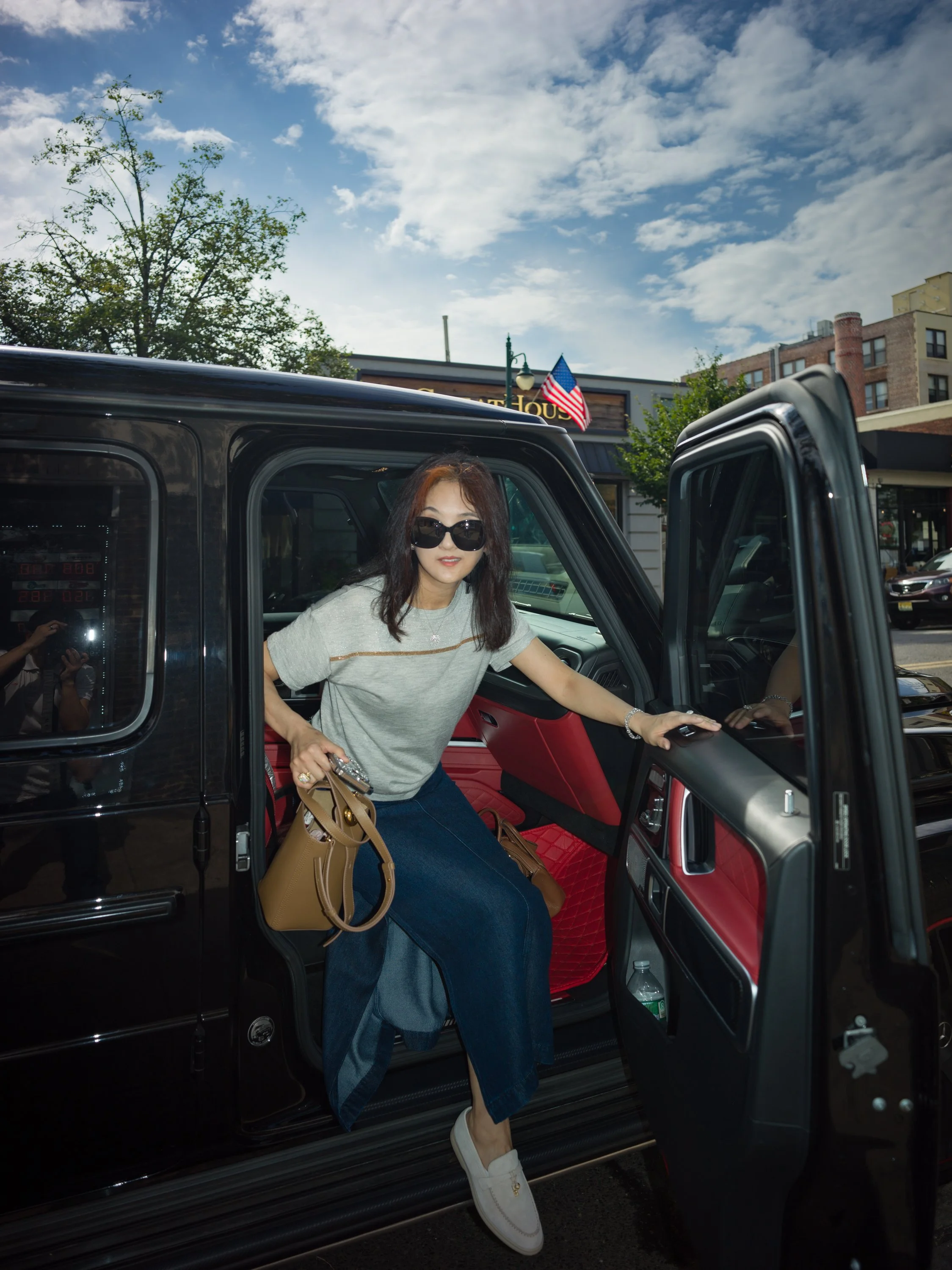
Look closely at the door window and you'll find the photographer. XCD 28P, f/4, 1/1250 s, ISO 100.
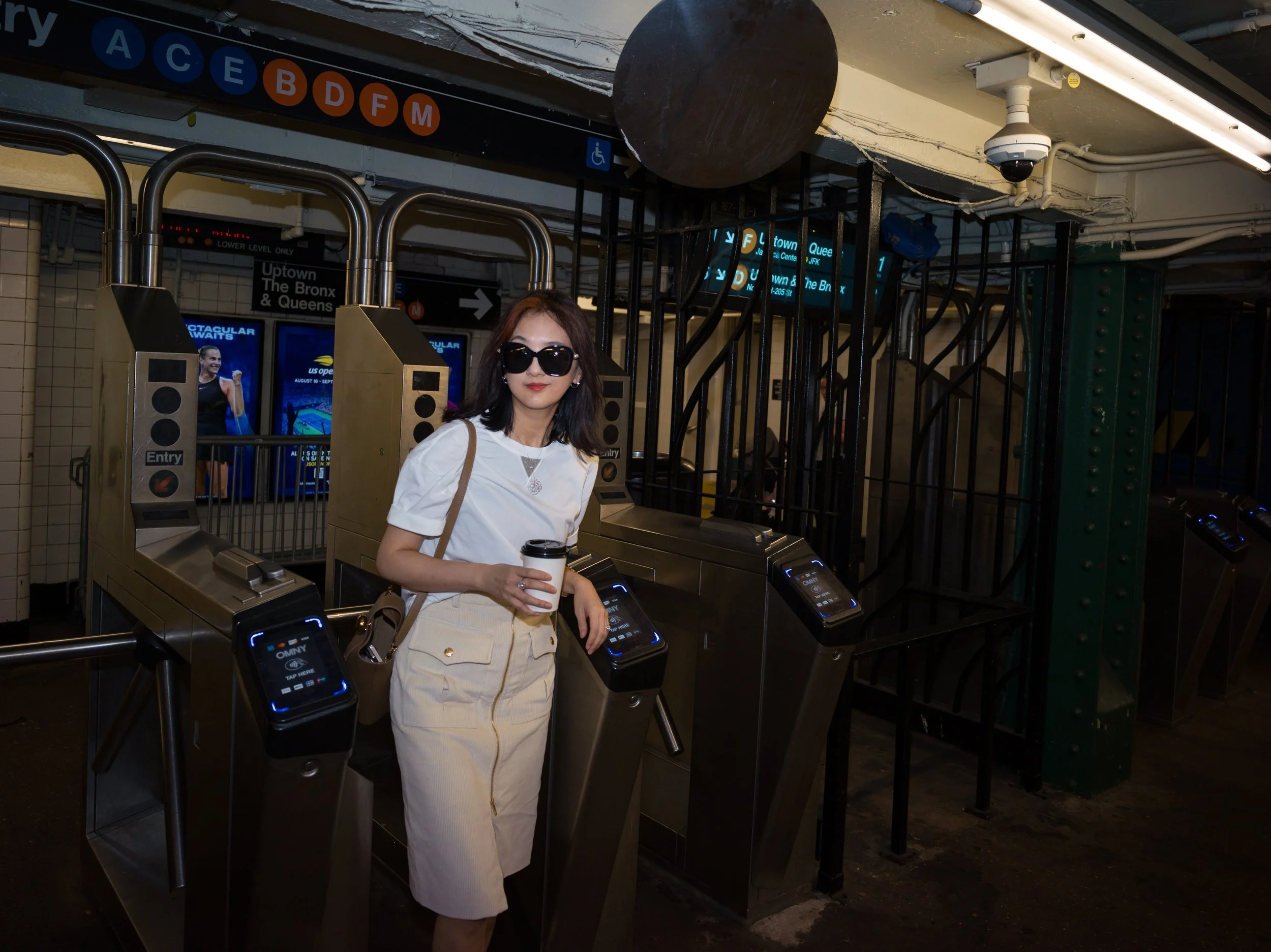
Back in the city in August. West 4th Street. XCD 28P, f/4, 1/200 s, ISO 800.
A summer of borrowed weekends
That Saturday turned out to be the start of something. The next day we stayed closer to home and wandered the main street of Summit under a hard blue sky: a wine shop, a bakery, and a black SUV with a red interior far too photogenic to leave alone. A couple of weeks later, with the kids still at camp, we went back into the city: a white tee, a cream skirt, a coffee, a subway turnstile, and a slow walk through the Village past old iron railings wrapped in ivy.
Three days, three outfits, three kinds of light, and the same camera, lens and flash every time. I like that constraint. When the tools stay the same, the variety has to come from the city and the person, which is where it belongs.
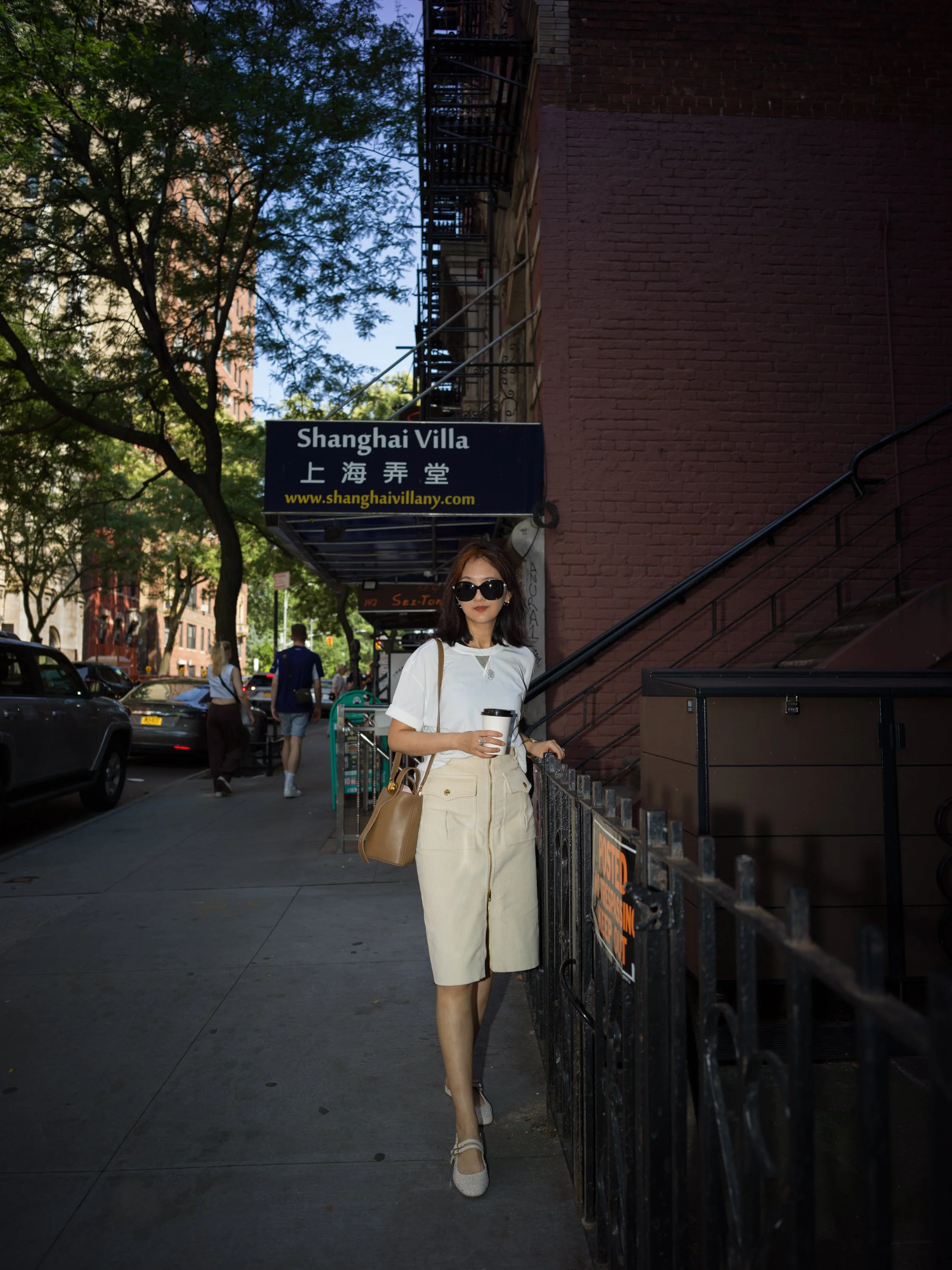
The Village, early August. XCD 28P, f/4, 1/400 s, ISO 200.
On Jenny
Street portraiture is a duet, and people tend to credit only the one holding the camera. It's even more of a duet when the person in front of the lens is your wife.
Jenny isn't a model, and these weren't a shoot. She was enjoying a day off with me, and the camera came along. That's exactly why I like these pictures. She knows when to hold still for a slow camera and when to keep walking. She'll stand under the Holland Tunnel signs without flinching, then be caught off guard by the wind two blocks later and laugh about it. The second picture is usually the better one. Many of my favourites are the in-between moments, like her checking her phone on a stoop because she'd stopped performing for a moment.
So what is the photographer for?
The Street Silhouettes essay ended with a bet on film: in a world of manufactured perfection, the honest, human-made image would become priceless. I think he was right about the destination and only slightly wrong about the vehicle. It doesn't have to be film. It has to be real: real people, real places, real light, and a real risk that the picture won't work.
The X1D II is a strange tool for that job, which may be why it suits it. It's slow in an era of instant, deliberate in an era of automatic, metal in an era of software. With a pancake lens and a pocket flash, it asks me to stand closer, wait longer and commit to each frame. Every one of these photographs records a moment that actually happened: a Saturday lunch, a shop window, a red light at 1:41 in the afternoon, a weekend the house was quiet.
The machines can make an image. They can't have been there. Before long, that may be the main thing a photograph is worth, and I'm fine with that.
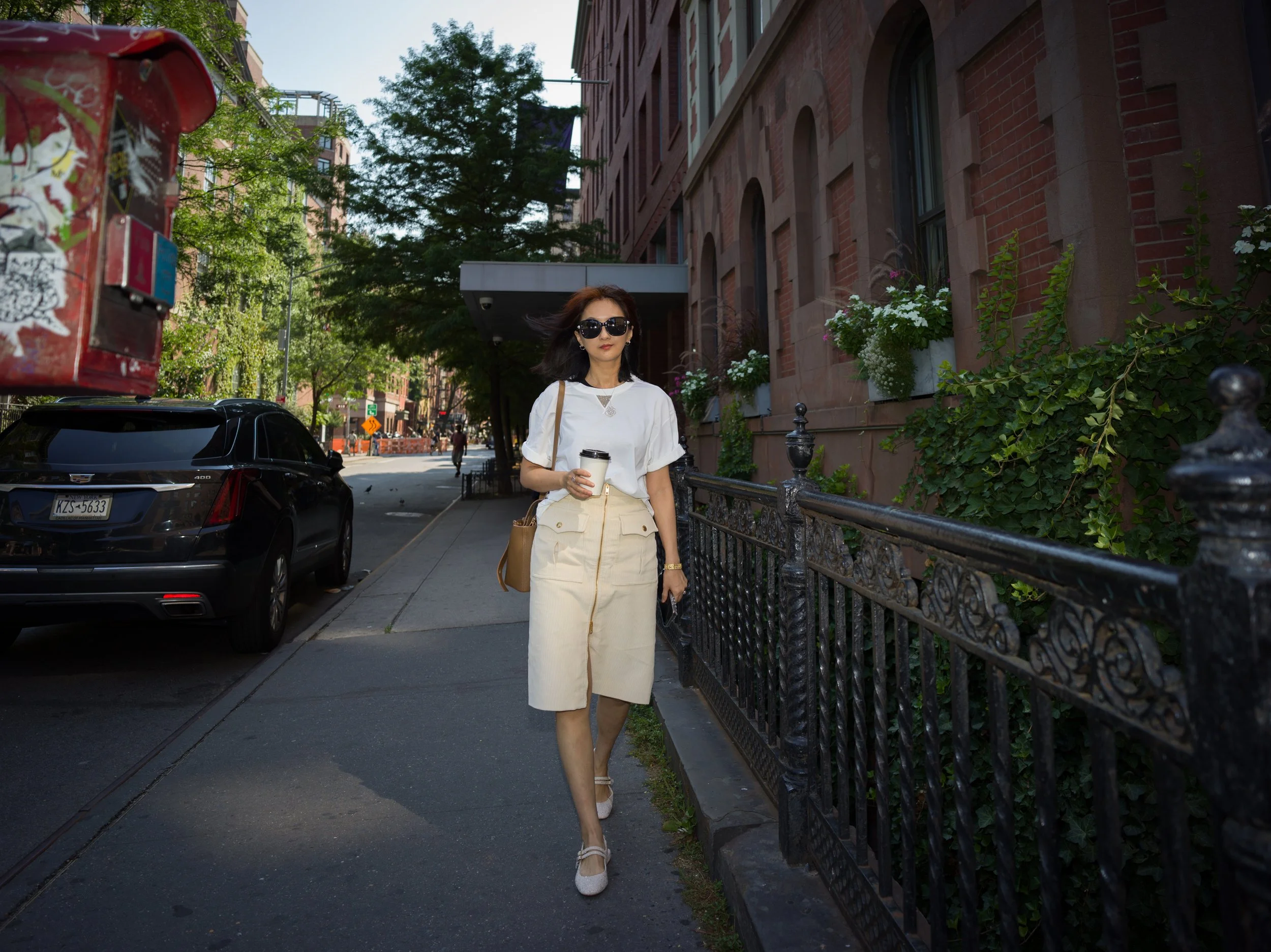
Walking out of the frame, and out of summer. XCD 28P, f/4, 1/500 s, ISO 200.
Technical notes. Hasselblad X1D II 50C. Eleven frames with the XCD 28mm f/4 P and four (the Chanel window through the railing portrait) with the XCD 55mm f/2.5 V. Many frames were lit with a Godox iT30 Pro. Shot at ISO 100–800, processed lightly in Adobe Lightroom, cropped to 3:4. July 19–20 and August 3, 2025.
Sources for the gear sections: Hasselblad's X1D II datasheet and XCD 55V page; X1D II reviews from Photography Blog, Digital Camera World, ePHOTOzine, The Phoblographer and RedShark News; DPReview and Shige on the XCD 28P; PetaPixel, Digital Camera World and Amateur Photographer on the Godox iT30 Pro; Street Silhouettes, "The Role of the Photographer in the Future" (2019).